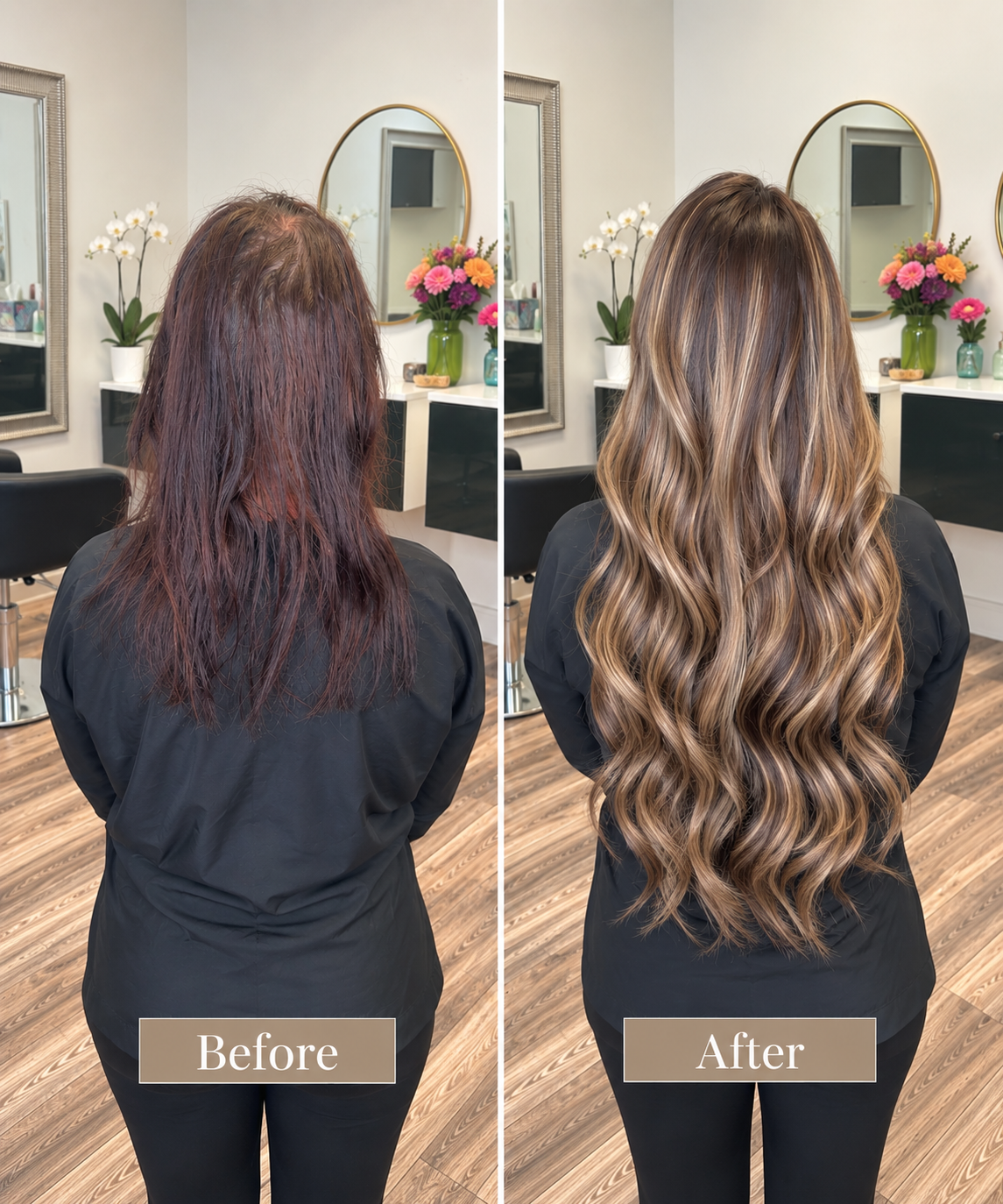
Can extensions help after chemotherapy?
They may help some people create the appearance of added length, fullness, or coverage after chemotherapy, but they are not right for every stage of recovery. Chemotherapy can affect the density, strength, texture, and growth pattern of the hair. The scalp may also remain sensitive, dry, tender, or easily irritated for a period of time.
Because of these changes, the most appropriate solution is based on the current condition of the hair and scalp—not simply on how much hair has returned. Depending on your needs, a salon consultation may include discussion of extensions, a Hairdreams MicroLines system, a Mesh Integration System, a Meshless Integration System, or another approach designed around coverage and visual fullness.
Extensions do not treat chemotherapy-related hair loss or change the medical course of regrowth. Their purpose is cosmetic: to help create a preferred appearance when the hair and scalp are ready for a carefully selected service.
When should you consider a salon consultation?
Timing is personal, and your medical team should remain the first source of guidance about scalp health and hair regrowth. A private salon consultation can be useful once your oncology team has indicated that cosmetic hair services are appropriate and you are comfortable having your scalp and hair evaluated.
Many clients benefit from waiting until the scalp is no longer unusually tender or inflamed and the returning hair has enough stability for the proposed method. Very short, fragile, or uneven regrowth may need a non-tension solution rather than traditional strand-by-strand extensions.
At Nasrin Salon, a consultation can help determine whether the immediate goal is discreet coverage, increased volume, a more balanced shape, or a gradual plan as your natural hair continues to change. A professional evaluation is especially important if you notice persistent scalp discomfort, open areas, unusual scaling, or sudden changes in hair growth. Those concerns should be discussed with a qualified medical professional before scheduling a cosmetic service.
Which hair solutions may be discussed?
There is no universal post-chemotherapy extension method. The right choice depends on density, length, texture, scalp comfort, styling habits, and how much tension the hair can safely support. Some clients may be candidates for very lightweight extensions, while others may be better served by an integration system that creates the appearance of fuller coverage over a larger area.
A Hair Loss Consultation at Nasrin Salon can provide a more focused evaluation for clients experiencing reduced density or uneven regrowth. Mesh Integration System, Meshless Integration System, and Hairdreams MicroLines consultations may be appropriate areas to explore when coverage and blending are more important than simply adding length.
V-Light Extensions may also be discussed in select cases where subtle visual fullness is the goal, but suitability must be assessed in person. K-Tip, tape-in, micro bead, micro link, or beaded weft methods should never be selected solely from photographs or based on a friend’s experience. Attachment points, weight, and maintenance requirements can vary significantly.
The safest-looking result usually comes from choosing the lightest, most discreet option that meets the client’s goal while respecting the condition of the natural hair.
Why an in-person evaluation matters after chemotherapy
Post-treatment hair can be different from the hair you had before chemotherapy. It may return with a new wave pattern, finer strands, mixed lengths, increased dryness, or areas of uneven density. A stylist needs to see the hair movement, identify the strongest sections, and understand how the scalp feels before recommending an attachment method.
During a private consultation, you can discuss your treatment timeline, current hair routine, desired coverage, lifestyle, and comfort preferences. You can also ask how the proposed system would be removed or maintained, whether it may need adjustment as the hair grows, and what signs would indicate that the service should be paused.
A consultation is also an opportunity to set realistic expectations. Extensions or integration systems can improve the look of fullness, but they cannot restore natural density, guarantee a specific growth pattern, or replace medical care. A thoughtful plan should leave room for your hair and comfort to change over time.
How to care for post-chemotherapy hair with extensions or integration
If a professional determines that a cosmetic hair service is suitable, gentle care becomes especially important. Follow the salon’s specific instructions, since care varies by attachment method and system.
- Use the recommended brushing technique and begin below the attachment points rather than pulling from the scalp.
- Avoid forceful detangling, tight ponytails, and styles that place repeated tension on the same areas.
- Use only products and washing routines approved for your specific extension or integration method.
- Dry the roots and attachment areas thoroughly when instructed, while avoiding aggressive heat or rubbing.
- Schedule maintenance at the recommended interval and contact the salon sooner if you notice pulling, tenderness, slipping, matting, or increased shedding.
- Tell your stylist promptly if your scalp becomes uncomfortable. Pain is not a sign that you should simply adjust to the service.
Questions to bring to your consultation
A consultation can feel easier when you arrive with a short list of questions. You may want to ask:
What type of solution is appropriate for my current density and scalp comfort?
Would added length, localized volume, or broader coverage better match my goal?
How much weight or tension would the recommended method place on my natural hair?
How often would maintenance be needed, and what happens as my hair regrows?
What home-care routine would help protect my hair and scalp?
Should I wait longer or receive medical clearance before proceeding?
At Nasrin Salon, these conversations are handled discreetly and with attention to the practical and emotional sides of changing hair after treatment.
A thoughtful next step in Plano
If you are exploring hair extensions after chemotherapy, start with information rather than a specific attachment method. The best option may be a lightweight extension service, an integration system, a gradual coverage plan, or simply more time for natural regrowth. An honest assessment can help you avoid unnecessary tension and choose a solution that fits your current needs.
Nasrin Salon offers private Hair Loss Consultation and extension consultations at 1805 Preston Rd, Suite 502, Plano, TX 75093, serving clients from West Plano, North Dallas, Frisco, Allen, and nearby North Texas communities. Bring your questions, share your goals, and let the condition of your hair and scalp guide the plan.
Frequently asked questions
Can I get extensions while I am still receiving chemotherapy?
Do not assume that extensions are appropriate during active treatment. Ask your oncology team about cosmetic hair services, and wait for professional guidance regarding scalp sensitivity, hair strength, and infection risk. A salon consultation can follow when your medical team considers it appropriate.
Will extensions help my hair grow back after chemotherapy?
No. Extensions and integration systems are cosmetic services that can create the appearance of added fullness or coverage. They do not stimulate growth, treat hair loss, or change the medical recovery process.
What if my returning hair is very short or uneven?
Very short or fragile regrowth may not support traditional extensions safely. A consultation may identify an integration system or another coverage-focused option, or recommend waiting until the hair has more stability.
Can a salon tell me whether my scalp is medically ready?
A stylist can assess visible hair and scalp condition for service suitability, but cannot replace medical advice. If you have tenderness, inflammation, sores, or other concerns, speak with your healthcare provider before scheduling a cosmetic service.
Are hair integration systems different from extensions?
Often, yes. Extensions typically attach added hair to selected sections to create length or volume, while integration systems may be designed to create broader visual coverage and blend with existing hair. The best choice depends on your density, goals, and comfort.