
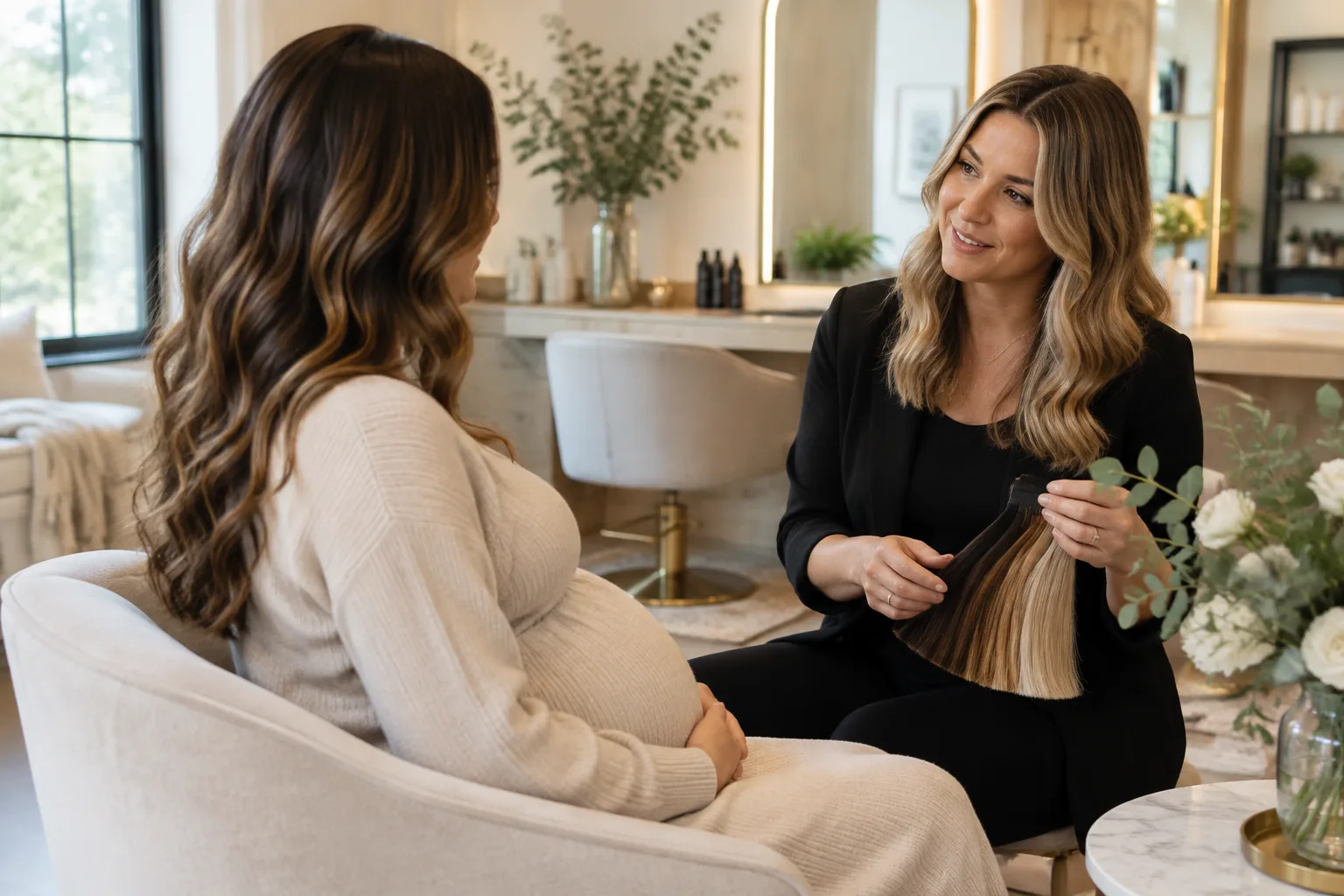
Can pregnant women wear hair extensions?
Many pregnant clients ask whether they can continue wearing or begin wearing hair extensions. In general, pregnancy does not create one universal rule for every extension client. The more useful question is whether the chosen method, installation, maintenance schedule, and overall weight feel appropriate for your current hair and scalp needs.
Pregnancy can bring changes in texture, shedding patterns, scalp sensitivity, comfort, and tolerance for longer appointments. Those changes may make a previously comfortable extension routine feel different. Because every pregnancy and hair situation is unique, an in-person consultation is the best way to discuss your goals before choosing a method or scheduling an installation.
A hair extension consultation is not medical care and cannot determine whether extensions are appropriate for a specific pregnancy or health condition. If your obstetrician, midwife, or other healthcare professional has given you hair-care restrictions, scalp guidance, or advice related to shedding, follow that guidance and discuss it with your stylist.
- Consider your current scalp comfort, hair density, and daily routine.
- Ask how much time an installation or maintenance appointment may require.
- Share any recent changes in shedding, sensitivity, or hair texture.
- Contact your healthcare provider with medical questions about pregnancy-related hair changes.
Why a consultation matters more during pregnancy
A private consultation allows your stylist to look closely at your natural hair, discuss the result you want, and consider how your needs may change throughout pregnancy. You may be seeking length, added volume, coverage, or a discreet solution for areas that look finer. The most suitable approach depends on the condition of your hair—not simply on whether you are pregnant.
During the appointment, you can discuss the difference between methods such as K-Tip Hair Extensions, Invisible Beaded Weft Hair Extensions, Micro Bead or Micro Link Hair Extensions, Tape-In Hair Extensions, and V-Light Extensions. Some clients may also need a more individualized conversation about Hairdreams MicroLines, a Mesh Integration System, or a Meshless Integration System. These options should not be selected from a general rule or online checklist; they require an assessment of your hair and your desired coverage.
Nasrin Salon offers private consultations in Plano for clients considering extensions, added volume, coverage, or solutions for fine or thinning hair. A consultation can also help you decide that postponing an installation or choosing a lower-maintenance plan is the better option for now.
- Bring reference photos that show the level of length or volume you prefer.
- Mention whether you are in your first, second, or third trimester if relevant to appointment comfort.
- Tell your stylist about known scalp sensitivity or recent hair changes.
- Ask what maintenance would involve before committing to an extension method.
Pregnancy-related changes that may affect your extension plan
Hair and scalp needs can change during pregnancy and after delivery. Some clients notice altered texture or oiliness, while others become more sensitive to touch, tension, or prolonged appointments. Hair may also feel different during the postpartum period, so a plan that works temporarily may need to be reassessed later.
If you are experiencing significant shedding, breakage, scalp discomfort, sores, or sudden changes in hair density, pause before adding extensions and seek appropriate professional advice. Extensions can add weight or require attachment points, so the condition and strength of your natural hair should be part of the decision.
The goal is not to force a particular method. A careful stylist should be willing to adjust the plan, recommend a lighter or more discreet approach when appropriate, or explain why a hair-loss consultation may be more useful before installation.
- Do not ignore persistent scalp pain, irritation, or notable breakage.
- Avoid treating a changing hair situation as a one-size-fits-all extension decision.
- Schedule a reassessment if your hair needs change during pregnancy or after delivery.
- Ask about removal planning before you begin.
Comfort and appointment planning for expecting clients
Comfort is an important part of the experience. Depending on the method, an appointment may involve sitting for an extended period, keeping your head in one position, or returning for regular maintenance. Talk with the salon in advance about breaks, seating, timing, and any accommodations that would make the visit easier.
You may also prefer to schedule earlier in the day if that is when you feel most comfortable. Keep your routine practical: choose a style you can care for without excessive pulling, brushing, or heat. Your stylist can explain how to detangle gently, sleep comfortably, and keep attachment areas clean according to the method selected.
Do not apply or remove extensions at home unless you have been specifically taught how to do so safely. Professional maintenance is important for protecting your natural hair and identifying changes before they become more difficult to manage.
- Ask whether the appointment can include comfort breaks.
- Choose a maintenance schedule you can realistically keep.
- Use gentle brushing techniques and follow method-specific care instructions.
- Book professional maintenance rather than waiting until attachments feel uncomfortable.
What about hair extensions after pregnancy?
The postpartum period can bring its own hair and scalp changes. If you notice increased shedding or reduced density after delivery, schedule a consultation before reinstalling or changing extensions. A stylist may recommend waiting, modifying the method, or discussing a coverage-focused option after assessing your natural hair.
For clients concerned about fine or thinning hair, Nasrin Salon also provides Hair Loss Consultation appointments and consultation-based systems, including Mesh Integration System, Meshless Integration System, and Hairdreams MicroLines. These services are not a substitute for medical evaluation, but they can support a thoughtful conversation about appearance goals and coverage options.
A private discussion can be especially helpful when you prefer discretion. It gives you space to describe your concerns, ask direct questions, and understand which choices may be realistic for your current stage of life.
- Have your hair reassessed if postpartum shedding changes your density or comfort.
- Ask whether your original extension method is still appropriate.
- Consider a Hair Loss Consultation when coverage or thinning is your primary concern.
- Keep medical questions about postpartum shedding with a qualified healthcare professional.
Frequently asked questions
Is it safe to get hair extensions while pregnant?
There is no single answer for every client. Hair condition, scalp comfort, extension method, appointment demands, and individual health considerations all matter. Speak with your healthcare provider about medical concerns and arrange a professional salon consultation before choosing an extension service.
Can pregnancy make hair extensions uncomfortable?
It can. Changes in scalp sensitivity, hair texture, shedding, and general comfort may affect how an installation or maintenance appointment feels. Discuss these changes with your stylist so the plan can be adjusted or postponed if needed.
Should I tell my stylist that I am pregnant?
Yes. Sharing relevant information helps the salon discuss appointment comfort, timing, maintenance, and your changing hair needs. You only need to share what you are comfortable discussing, but pregnancy can be useful context for planning the service.
Can I wear extensions if my hair is thinning during pregnancy?
Thinning or increased shedding deserves an individualized assessment before extensions are added. A Hair Loss Consultation may be appropriate, and medical concerns should be discussed with your healthcare provider. A stylist can then explain whether extensions or a consultation-based integration option fits your goals.
When should I avoid getting extensions during pregnancy?
Consider postponing and seeking professional advice if you have scalp pain, irritation, sores, substantial breakage, or noticeable shedding. You should also reconsider if the appointment or maintenance routine would be physically uncomfortable or difficult to manage.