
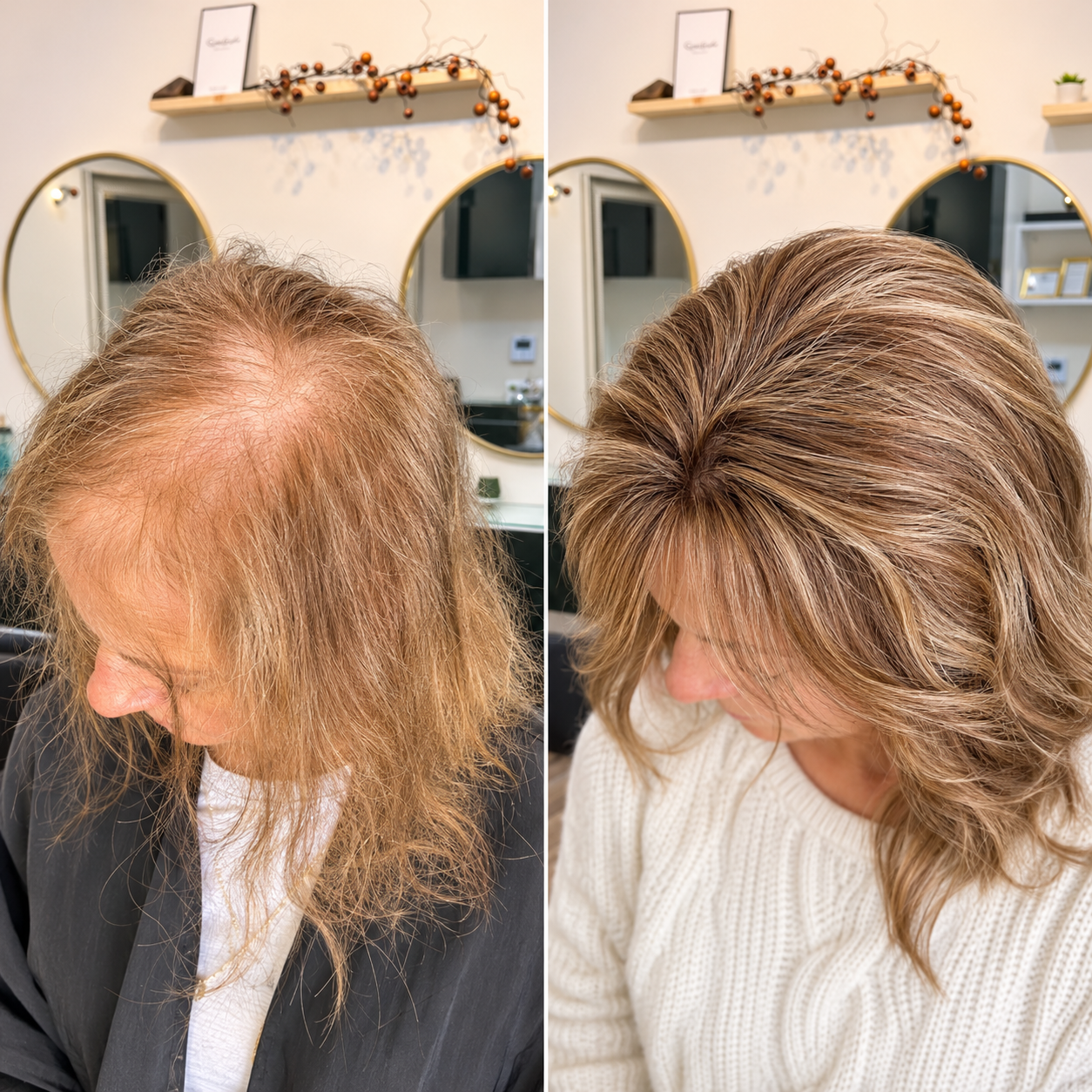
There is no single timeline that works for everyone
If you are going through chemotherapy or recovering from cancer treatment, it is understandable to want a clear answer about when you can wear a topper or extensions. The safest answer depends on more than the calendar. Your treatment plan, scalp condition, remaining hair, new growth, sensitivity, and oncology team’s guidance all matter.
A topper or hair integration system may be considered at a different point than traditional extensions. A topper is generally designed to add coverage or volume over a specific area, while extensions attach to existing hair. Because extensions place weight or tension on the hair and scalp, they may not be appropriate when hair is fragile, very short, actively shedding, or growing back unevenly.
Before scheduling a fitting, ask your oncologist or dermatologist whether your scalp and hair are ready for a nonmedical hair system or any attachment method. A salon consultation can help with design and suitability, but it cannot replace medical advice.
- Ask whether your scalp is healed, comfortable, and free from treatment-related irritation.
- Discuss whether your current shedding or regrowth pattern makes attachment advisable.
- Tell your stylist about any scalp sensitivity, tenderness, dryness, or changes in skin condition.
- Confirm which cleansing, topical, or medical instructions should continue during salon care.
What can affect the timing of a topper or extensions?
Chemotherapy affects people differently. Some clients experience substantial shedding during treatment, while others notice gradual thinning or patchy regrowth. Hair may also return with a different texture, density, or growth pattern. These changes can make a previously suitable attachment method uncomfortable or difficult to secure.
Scalp comfort is another important consideration. If the scalp is tender, inflamed, unusually dry, or sensitive to pressure, adhesive, clips, beads, or other attachment points may not feel appropriate. Even a lightweight option should be evaluated carefully rather than selected solely for appearance.
Your medical team may also recommend waiting during a period of active treatment, significant shedding, or scalp recovery. Their advice should take priority. When they are comfortable with you exploring a salon solution, bring those recommendations to your consultation so the stylist can plan within appropriate limits.
- Current hair density and the strength of the hair available for attachment
- Whether new growth is stable enough to support a method safely
- Scalp sensitivity and tolerance for pressure or contact
- The amount of coverage you need and how often you want to wear the solution
- Your daily routine, sleep habits, exercise, and comfort preferences
Topper, integration system, or extensions: which conversation comes first?
For many people experiencing treatment-related thinning, the first conversation should be about coverage and comfort rather than adding length. A hair topper may provide coverage over a specific area, but the best design depends on the location and pattern of thinning, the amount of existing hair, and how the system is secured.
When more comprehensive coverage is needed, a consultation may include options such as a Mesh Integration System, Meshless Integration System, or Hairdreams MicroLines. These services require an in-person consultation because the stylist needs to assess your hair and scalp directly. The goal is to understand whether a system is appropriate for your current stage of regrowth and what kind of daily care it would involve.
Traditional extension methods, including K-Tip Hair Extensions, Invisible Beaded Weft Hair Extensions, Micro Bead or Micro Link Hair Extensions, and Tape-In Hair Extensions, require enough healthy, stable hair to support attachment. They are not automatically the right choice for post-treatment hair. In some cases, the most responsible recommendation may be to wait or to consider a lighter coverage approach instead.
V-Light Extensions may also be discussed for targeted volume when the hair is suitable, but their appropriateness cannot be determined accurately without seeing the hair and scalp in person. A private assessment is especially important when density is changing.
- Coverage-focused systems may be more relevant than length-focused extensions when thinning is widespread.
- A method that works for one area of the scalp may not be suitable for another.
- A discreet appearance should never come at the expense of scalp comfort or hair integrity.
- The consultation should include a realistic maintenance plan, not just the initial appearance.
How to prepare for a private consultation in Plano
Once your medical team has given you permission to explore a salon option, gather a few details before your appointment. You do not need to have every answer. The purpose of the consultation is to look at your current hair, discuss your priorities, and determine what can be considered responsibly.
Bring the name of your treatment or medication only if you are comfortable sharing it, along with any relevant instructions from your medical team. You can also bring photos of your preferred coverage, parting, color, or length. Photos are helpful for discussing the overall look, but they do not determine whether a method is suitable.
At Nasrin Salon, an Extension Consultation or Hair Loss Consultation can provide a private setting to discuss coverage, volume, attachment, maintenance, and next steps. The stylist may recommend a specific service, suggest waiting, or explain why a different solution is more appropriate for your current hair.
- Write down questions about attachment, removal, washing, sleeping, and maintenance.
- Ask how the solution will be adjusted as your natural hair changes.
- Discuss what to do if the scalp becomes uncomfortable after wearing it.
- Be open about whether your priority is coverage, volume, length, ease, or privacy.
Care considerations once you are cleared to wear a solution
Follow both your healthcare provider’s instructions and the salon’s care guidance. Avoid assuming that a system or extension method can be worn continuously without adjustment. Hair and scalp changes during recovery can affect fit, comfort, and maintenance needs.
Use gentle handling and avoid pulling, brushing aggressively, or creating unnecessary tension. Ask the stylist to demonstrate how to cleanse, dry, and detangle the hair. If a system feels tight, painful, itchy, or unusually heavy, remove or loosen it as advised and contact the appropriate professional rather than trying to tolerate the discomfort.
Regular maintenance may be needed to protect the appearance and help the stylist reassess how the hair is responding. The schedule should be based on the method, your rate of regrowth, and your comfort—not on a generic timeline.
- Stop and seek guidance if you notice persistent pain, marked irritation, or worsening scalp sensitivity.
- Use only products and routines that are compatible with your medical and salon instructions.
- Schedule reassessment if your density, texture, or scalp condition changes.
- Treat comfort and hair health as equally important as the finished look.
A thoughtful next step for clients near Plano
If you are recovering from chemotherapy and wondering whether a topper, integration system, or extensions might be appropriate, an in-person consultation is the most useful next step after medical clearance. Nasrin Salon serves clients in Plano, West Plano, North Dallas, Frisco, Allen, and nearby North Texas communities.
Visit Nasrin Salon at 1805 Preston Rd, Suite 502, Plano, TX 75093, or learn more at nasrinsalon.com. A private consultation can help you understand your options without committing to a method before your hair and scalp are ready.
Frequently asked questions
Can I wear a hair topper while I am still receiving chemotherapy?
It depends on your treatment, scalp condition, hair density, and oncology team’s advice. Do not begin wearing a topper or extensions without asking your healthcare provider whether your scalp and hair can tolerate the contact or attachment method.
Is a topper usually different from hair extensions during recovery?
Yes. A topper is generally intended to provide coverage or volume in a particular area, while extensions attach to existing hair to add length or fullness. Extensions may place more tension on fragile or sparse hair, so the two options should be assessed separately.
How do I know whether my scalp is ready for a salon consultation?
A consultation may be useful once your healthcare provider is comfortable with you exploring a hair solution. Tell the stylist about tenderness, irritation, active shedding, or medical instructions so the assessment can remain appropriate and cautious.
Could a mesh integration system be considered after cancer treatment?
It may be considered for some clients, but suitability depends on your scalp, hair density, regrowth pattern, and desired coverage. Mesh Integration System, Meshless Integration System, and Hairdreams MicroLines all require an in-person consultation.
What if my hair is still changing after treatment?
Your stylist may recommend waiting, choosing a flexible coverage option, or planning periodic reassessments. A solution should be able to accommodate your current condition without creating unnecessary tension or discomfort.