What are K-Tip hair extensions?
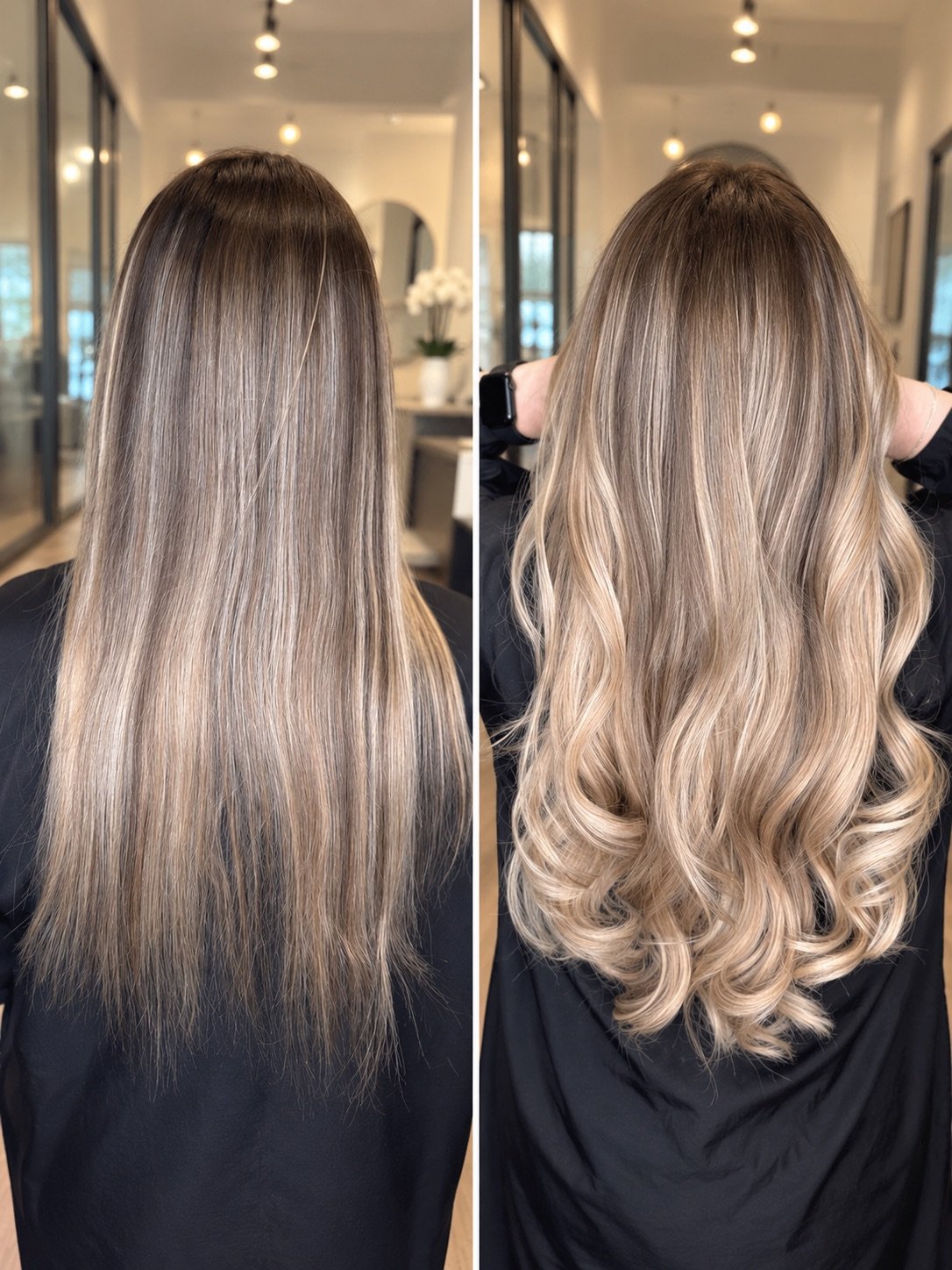
K-Tip hair extensions, also called fusion hair extensions, are individual strands or small bundles finished with a keratin tip. During application, the stylist attaches each tip to a small section of natural hair using controlled heat. The extensions are placed strategically to add length, fullness, or both while allowing the hair to move naturally.
Unlike some extension methods that use rows, adhesive strips, or beads, K-Tips are applied strand by strand. That individualized placement can be useful when a client wants a tailored shape, blended fullness, or discreet enhancement in selected areas. The finished look depends on several factors, including the density and condition of the natural hair, the desired result, the extension selection, and the stylist’s placement plan.
- Individual placement allows detailed customization.
- Fusion attachment points are designed to be concealed within the natural hair.
- The method can be considered for length, volume, or a combination of both.
- A professional assessment is important before deciding whether K-Tips are appropriate.
Who may be a good candidate for K-Tip fusion extensions?
K-Tips may appeal to clients who want a longer-term extension look without visible weft rows or tape panels. They can be considered by people seeking added fullness through the mid-lengths and ends, more styling versatility, or a gradual change in overall length.
Suitability is not determined by hair color or length alone. Your stylist will consider the diameter, density, strength, texture, and current condition of your natural hair. Hair that is fragile, experiencing active shedding, recently processed, or difficult to section may require a different approach or additional planning. Extensions should not be used to diagnose or treat hair loss, and a salon consultation cannot replace medical guidance when hair or scalp concerns are present.
For clients with fine or thinning hair, the priority is often a balanced plan that respects the amount of hair available to support an attachment. K-Tips may or may not be the best option. Depending on your goals, a consultation may also include discussion of other verified salon services, such as V-Light Extensions, a Mesh Integration System, a Meshless Integration System, or Hairdreams MicroLines.
- You want individualized placement rather than a visible row-based method.
- Your natural hair can be assessed as strong enough for the proposed plan.
- You are comfortable following a detailed home-care and maintenance routine.
- You understand that the final recommendation should be based on an in-person evaluation.
What happens during a K-Tip appointment?
A K-Tip service begins with planning rather than immediate application. Your stylist reviews your goals, observes how your hair falls, evaluates the areas you want to enhance, and discusses color, length, texture, and density. This is also the time to mention chemical services, heat styling habits, scalp sensitivity, recent changes in shedding, and any difficulty detangling your hair.
During application, the hair is sectioned carefully and the extension tips are attached to selected strands or small sections. Placement should follow the natural movement of your hair and leave appropriate spacing around the hairline and other areas that need flexibility. The service is completed by blending and shaping the extensions so the result works with your preferred style.
Timing varies according to the amount of hair, the number of extensions, the desired result, and the condition of the natural hair. A consultation gives you a more realistic understanding of the process than choosing a method based only on photographs or online descriptions.
- Bring a few examples of the length and shape you like.
- Explain how often you exercise, swim, travel, or wear your hair up.
- Share your regular color, blow-dry, and heat-styling routine.
- Ask how the proposed placement will work with your natural density and hairline.
How to care for K-Tip hair extensions at home
Good home care helps protect both the extension hair and your natural hair. Brush gently with an extension-appropriate brush, beginning at the ends and working upward in small sections. Support the hair near the attachment area while detangling, and avoid pulling through knots.
Wash according to the routine recommended for your hair and extensions. Keep cleansing focused on the scalp while allowing products to rinse through the lengths. Conditioner and other moisturizing products should generally be concentrated away from the keratin attachment points unless your stylist advises otherwise. Excess product near the bonds can affect how the attachments feel and behave.
Dry the attachment areas thoroughly after washing. Do not go to bed with wet hair, and consider a loose braid or low, gentle style for sleep if recommended. When using heat, protect the hair and avoid placing direct, prolonged heat on the keratin tips. Chlorinated or salt water can also make the hair more difficult to manage, so ask your stylist for a practical routine if swimming is part of your lifestyle.
- Detangle from the ends upward with gentle, controlled strokes.
- Dry the roots and attachment areas completely.
- Use heat protection and keep direct heat away from the bonds.
- Avoid tight hairstyles that create unnecessary tension.
- Schedule maintenance before tangling or significant outgrowth becomes difficult to manage.
Removal, maintenance, and your next set
K-Tip extensions are not intended to remain in place indefinitely. As your natural hair grows, the attachment points move farther from the scalp, which can make brushing, styling, and daily care more challenging. Maintenance timing depends on your growth rate, the installation, your home-care routine, and the condition of your natural hair.
Removal should be performed professionally rather than pulled out at home. A trained stylist uses the appropriate process to release the keratin attachment while working carefully through the natural hair. After removal, your stylist can evaluate the hair and discuss whether a new K-Tip set is appropriate, whether adjustments are needed, or whether another extension or hair-loss-solution service better matches your current needs.
At Nasrin Salon, K-Tip Hair Extensions are offered as a new set after removal. Planning the next set in advance can help you understand the transition between appointments and make choices that support the condition and appearance of your natural hair.
- Do not remove fusion extensions yourself.
- Book maintenance or removal before severe matting develops.
- Reassess the condition of your natural hair before installing a new set.
- Ask whether your preferred styling habits are compatible with the proposed method.
Why an in-person consultation matters in Plano
A K-Tip recommendation should be personal, especially when the goal includes coverage, added volume, or working with fine or thinning hair. Photos can be helpful for discussing style preferences, but they cannot show every factor that affects attachment placement, support, blending, or comfort.
At Nasrin Salon, an Extension Consultation provides space to discuss your goals privately and compare suitable options. Clients in Plano, West Plano, North Dallas, Frisco, Allen, and nearby North Texas communities can visit the salon at 1805 Preston Rd, Suite 502, Plano, TX 75093. If your concern involves noticeable thinning or changes in shedding, a Hair Loss Consultation may also be an appropriate place to begin.
- Bring questions about application, removal, maintenance, and home care.
- Be open about your current hair routine and any recent changes in density.
- Ask what result is realistic for your natural hair.
- Choose a plan based on hair health and lifestyle, not only the method’s appearance.
Frequently asked questions
Are K-Tip extensions the same as fusion extensions?
K-Tip extensions are a type of fusion extension. The keratin-tipped strands are attached to selected sections of natural hair using controlled heat, allowing for individualized placement.
Can K-Tips add volume without adding a lot of length?
They may be used to create added fullness as well as length, depending on your natural density, desired shape, and the stylist’s placement plan. A consultation is needed to determine whether K-Tips are suitable for your goal.
Are K-Tip extensions appropriate for fine or thinning hair?
They may be appropriate for some clients, but not for everyone. The stylist should evaluate the amount, strength, and condition of your natural hair before recommending K-Tips. Other options may be more suitable depending on your needs.
Can I remove K-Tip hair extensions at home?
Professional removal is recommended. Trying to pull or break apart the bonds at home can cause unnecessary tangling or stress to the natural hair.
How do I know whether K-Tips or another method is right for me?
An in-person Extension Consultation allows the stylist to compare your goals, natural hair characteristics, lifestyle, and maintenance preferences. If thinning or hair loss is part of the concern, ask whether a Hair Loss Consultation or an integration-focused option should also be considered.